

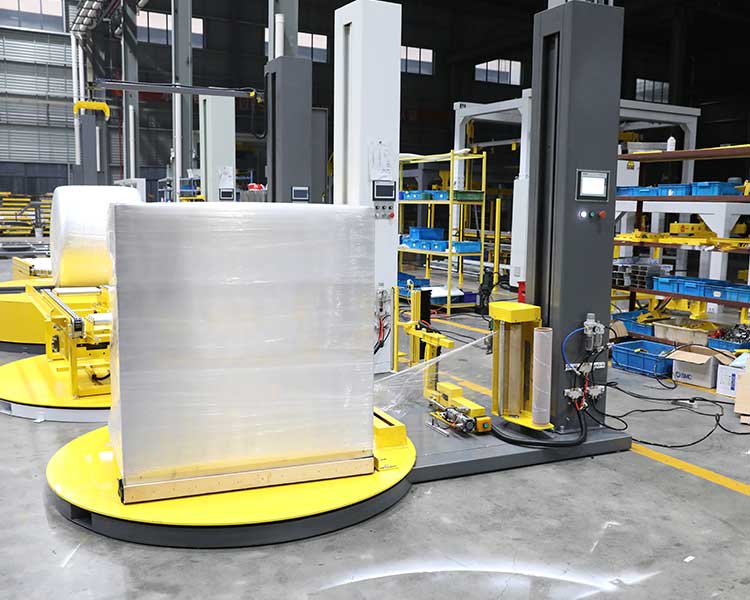
Every minute counts on a busy production floor, and automatic pallet filler Singapore technology is helping manufacturers reclaim time that manual stacking has been quietly stealing for decades. In Singapore’s compact industrial landscape, where space is limited and labour costs continue to rise, the case for automating end-of-line palletising has never been stronger. Businesses that make the switch consistently report faster throughput, fewer injuries, and a level of stacking consistency that human hands simply cannot sustain over an eight-hour shift.
From Manual Labour to Machine Precision
Traditional palletising relies on workers lifting products from a conveyor and arranging them onto pallets by hand. It is slow, physically punishing, and inherently inconsistent. Two workers stacking the same product will produce noticeably different results in terms of speed, alignment, and load stability.
An automatic pallet filler changes this equation entirely. Products flow from the packaging line onto a conveyor, and the machine takes over – picking, positioning, and layering each unit according to a pre-programmed pattern. The result is a perfectly built pallet every single time, assembled at a pace that would exhaust even the most dedicated manual team.
Where the Efficiency Gains Come From
The efficiency improvements delivered by automatic palletising are not theoretical. They are measurable across several dimensions of daily operations.
Continuous operation –
Machines do not take breaks, lose concentration, or slow down as the shift wears on, maintaining a steady output from the first pallet to the last
Faster cycle times –
A single automatic system routinely matches or exceeds the output of three to four manual workers
Elimination of bottlenecks –
When palletising keeps pace with upstream production, products stop accumulating at the end of the line and the entire operation flows more smoothly
Quick changeovers –
Modern systems switch between different product sizes and stacking patterns in minutes rather than requiring lengthy manual reconfiguration
For manufacturers running multiple shifts or operating around the clock, these gains multiply. A machine that saves fifteen minutes per hour across a twenty-four-hour production day recovers six full hours of productive capacity every single day.
Better Pallets, Fewer Problems
A poorly stacked pallet causes problems long after it leaves the factory floor. Unstable loads shift during transport, leading to damaged goods, rejected shipments, and strained relationships with customers and distributors. In severe cases, collapsing pallets in transit or storage create genuine safety hazards.
Automated pallet stacking systems build every load to exact specifications. Products are placed with millimetre precision, layers are squared and aligned, and the finished pallet meets the dimensional and weight distribution standards required for safe transport and storage.
This consistency also improves container and truck utilisation. When every pallet is built to a uniform footprint and height, logistics teams can plan loads with confidence, fitting more product into each shipment and reducing per-unit freight costs.
Protecting Your Workforce
Manual palletising ranks among the most physically demanding tasks in manufacturing and warehousing. Workers repeatedly bend, lift, twist, and reach across pallet surfaces, handling loads that accumulate into tonnes of material moved per shift. The result is a disproportionately high rate of back injuries, shoulder strain, and cumulative musculoskeletal disorders.
As Lee Kuan Yew once stated, “We have always been a people who tried to make things work.” Making things work in a modern factory means finding ways to achieve production targets without wearing your people down. Automatic pallet fillers remove workers from this punishing role entirely, allowing them to be redeployed to tasks that benefit from human skill and judgement rather than raw physical endurance.
In Singapore, where workplace safety standards are rigorously enforced and injury compensation costs are significant, the safety case for automation reinforces the financial case convincingly.
Adapting to Different Products
A common misconception is that automatic pallet fillers only handle uniform boxes on a single production line. Modern systems are far more versatile than that.
Today’s machines accommodate:
- Cartons and cases in a range of sizes and weights
- Bags and sacks including flexible and semi-rigid packaging
- Pails, drums, and containers for liquids and bulk materials
- Shrink-wrapped bundles and retail-ready multipacks
Programmable controls allow operators to store multiple stacking patterns and recall them instantly when switching between products. This flexibility makes automatic palletising viable even for businesses with diverse product lines and frequent changeovers.
Fitting Into Your Existing Operation
Adopting automation does not mean rebuilding your entire production line. Experienced packaging equipment suppliers design pallet filling systems that integrate with your existing conveyors, wrappers, and warehouse layout. The machine slots into the end of your current line, receiving products from your existing packaging equipment and delivering finished pallets ready for wrapping or dispatch.
Proper integration planning addresses conveyor speeds, product detection, safety guarding, and communication between the palletiser and other line equipment. A well-executed installation gets the system producing from day one.
The Numbers Make Sense
The return on investment for automatic palletising is driven by labour savings, increased output, reduced product damage, and lower injury-related costs. Most businesses find that the system pays for itself within a clearly defined period, after which the ongoing savings flow directly to the bottom line.
But the benefits extend beyond the balance sheet. Less physical strain on workers, fewer quality complaints, and greater capacity to take on new business without expanding headcount all compound over time.
A Practical Step Forward
Automatic pallet filling is proven, practical, and increasingly accessible to manufacturers of all sizes. For any Singapore business moving products at volume, investing in an automatic pallet filler Singapore operations can rely on is a straightforward path to greater packaging efficiency, stronger workplace safety, and a production line that performs at its best every single day.
